
Fish List
Explore the Atlantis & Co. fish list, featuring marine fish and invertebrates with helpful details to help you choose suitable aquarium livestock.
Fish List
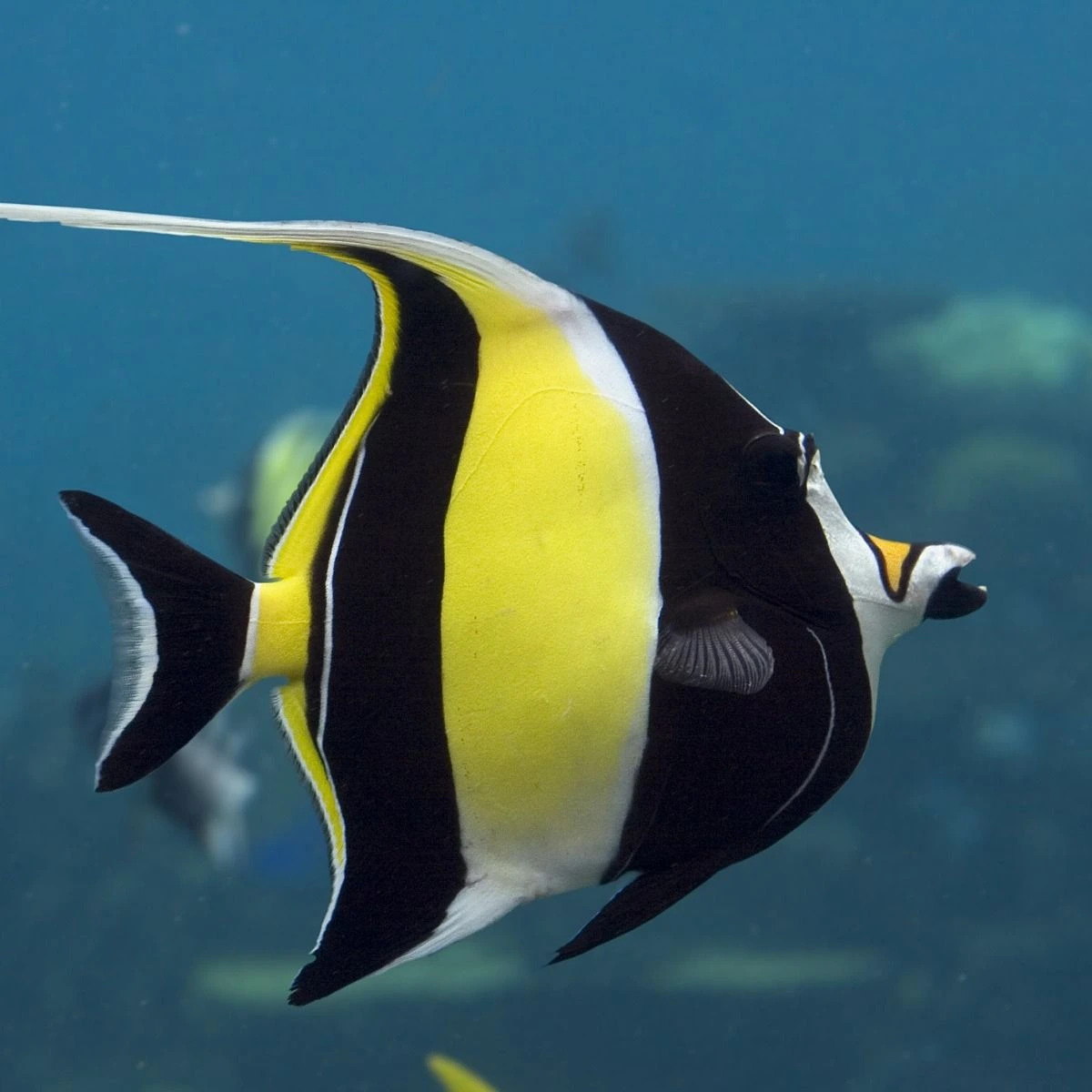
Moorish Idol
(Zanclus cornutus)
- Iconic reef fish with striking black, white, and yellow bands.
- Often mistaken for angelfish or butterflyfish but belongs to its own family.
- Symbol of good luck in Hawaiian culture.
- Very difficult to keep in captivity due to their specialized diet and sensitivity.
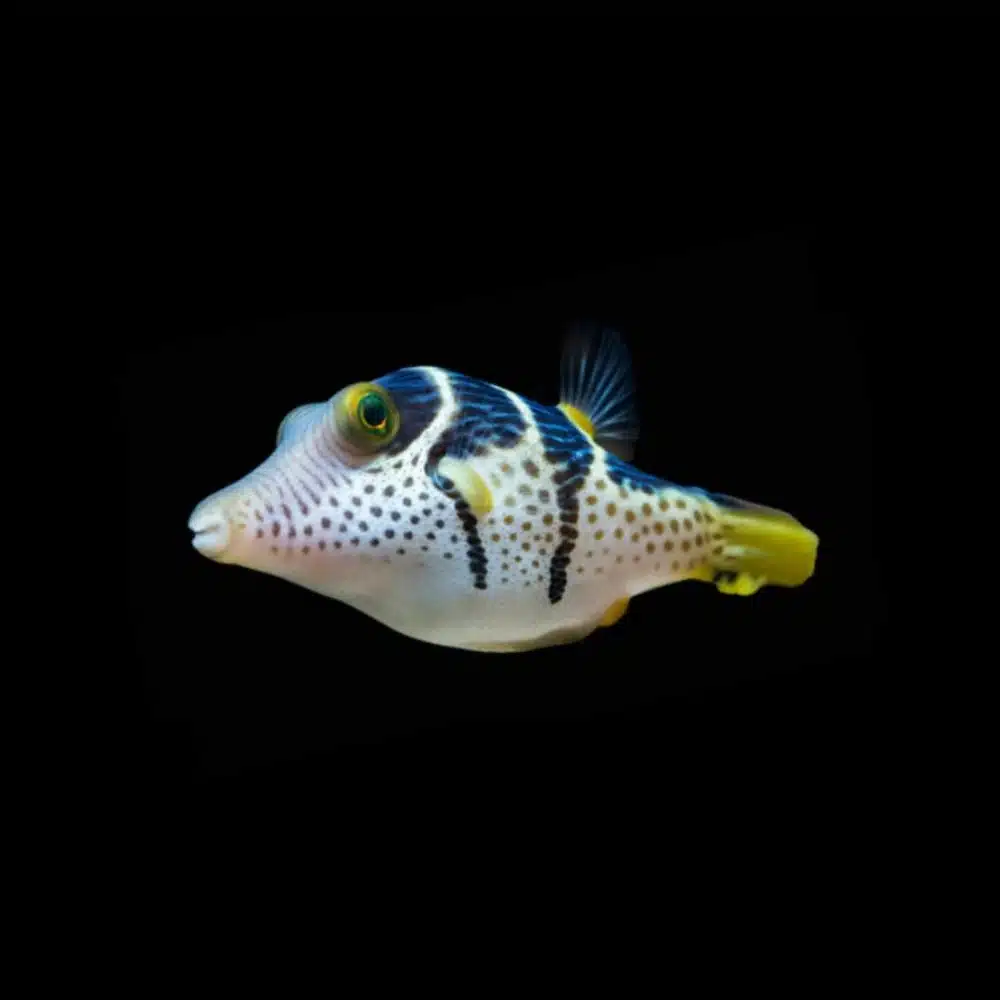
Puffer Fish
(Tetraodontidae)
- Inflate their bodies by swallowing water or air to deter predators.
- Some species contain tetrodotoxin, a potent neurotoxin.
- Intelligent, curious, and known for recognizing their owners in captivity.
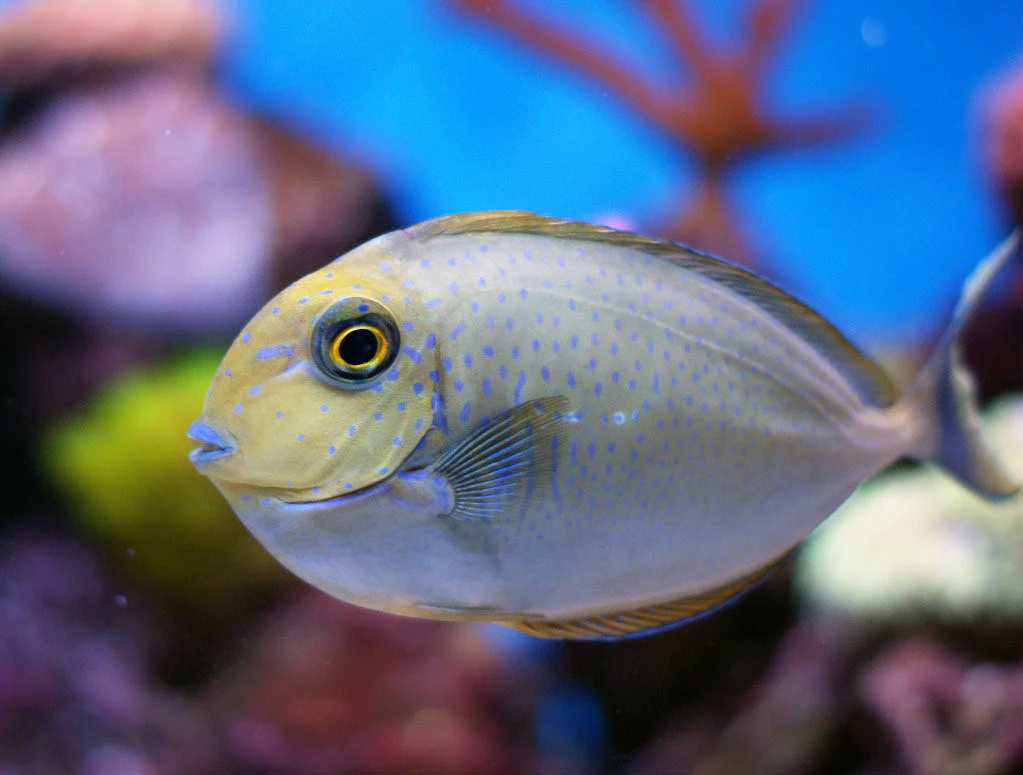
Vlamingi Tang
(Naso vlamingii)
- Changes color dramatically depending on mood or stress.
- Grows large (up to 24″) and needs lots of swimming space.
- Known as a gentle giant among tangs.
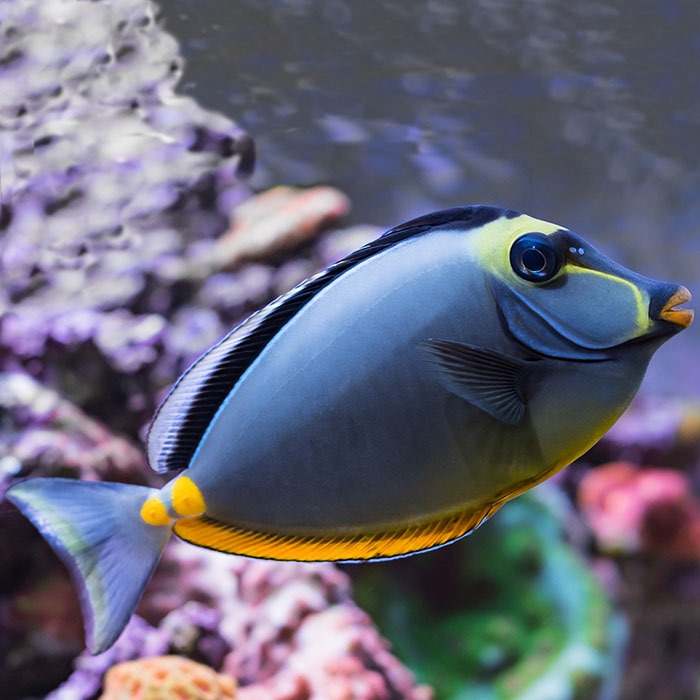
Lipstick Tang / Naso Tang
(Naso lituratus)
- Named for its bright orange lips.
- Omnivorous grazer; loves seaweed like nori.
- Peaceful and hardy, popular in larger reef tanks.
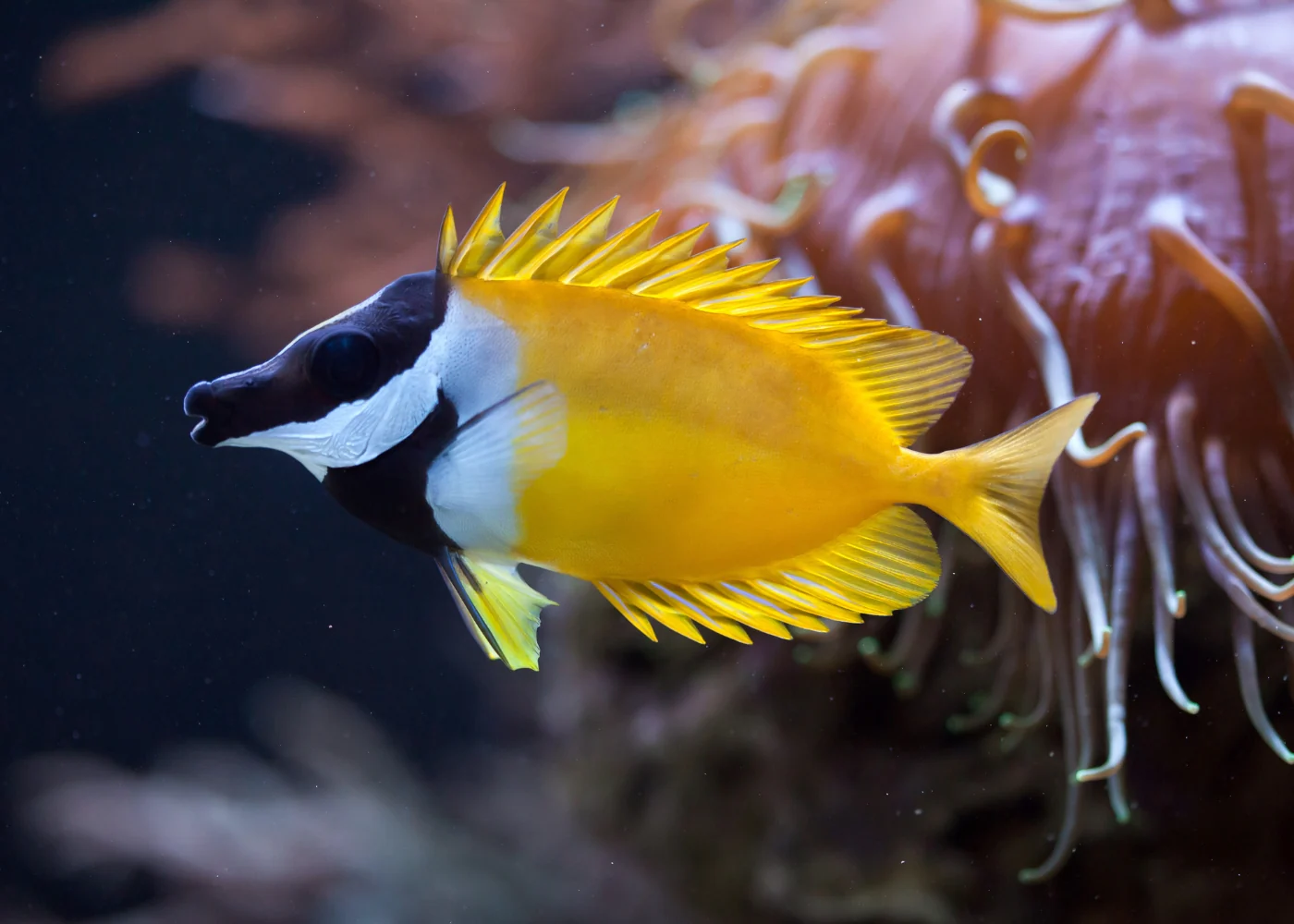
Foxface
(Siganus vulpinus)
- Venomous spines used for defense, but generally peaceful.
- Eats algae and helps keep tanks clean.
- Can “play dead” when frightened or stressed.
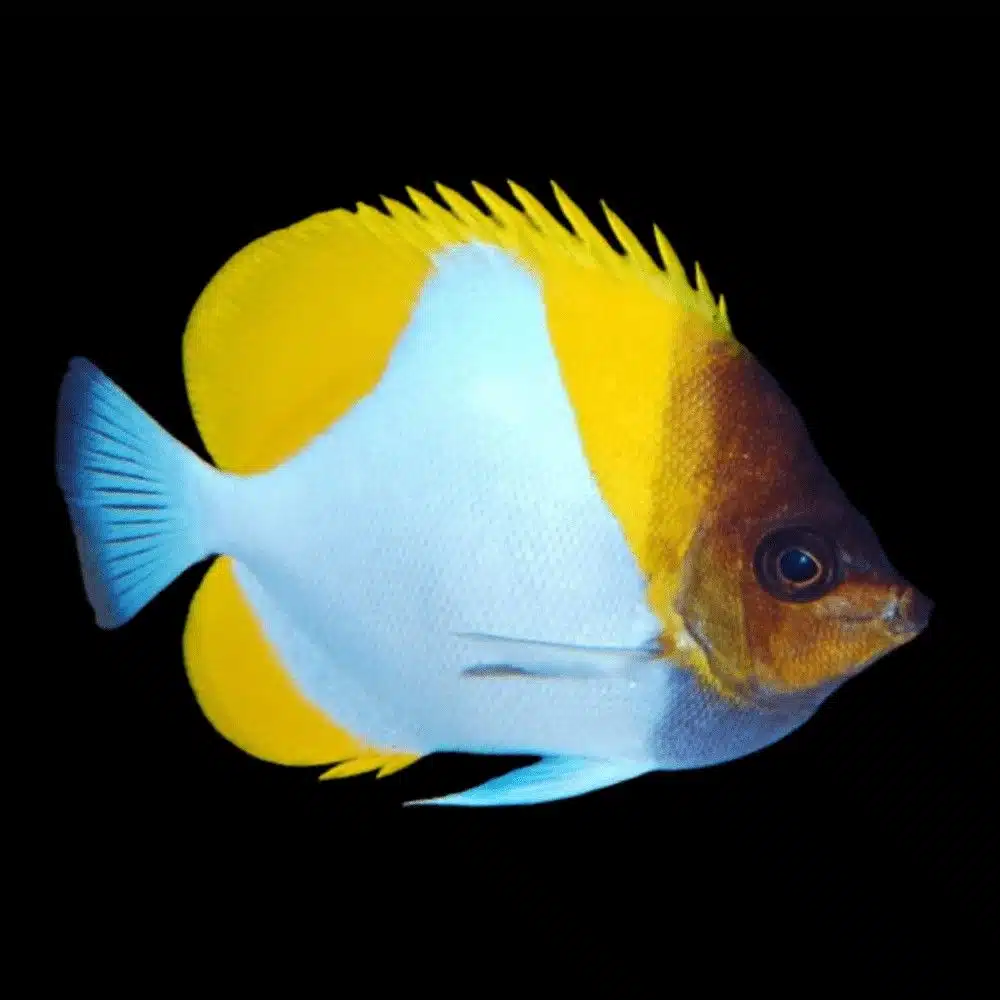
Pyramid Butterflyfish
(Hemitaurichthys polylepis)
- Unique butterflyfish that does well in groups.
- Reef-safe; unlike many other butterflyfish, it avoids coral polyps.
- Named for the white triangle on its body.
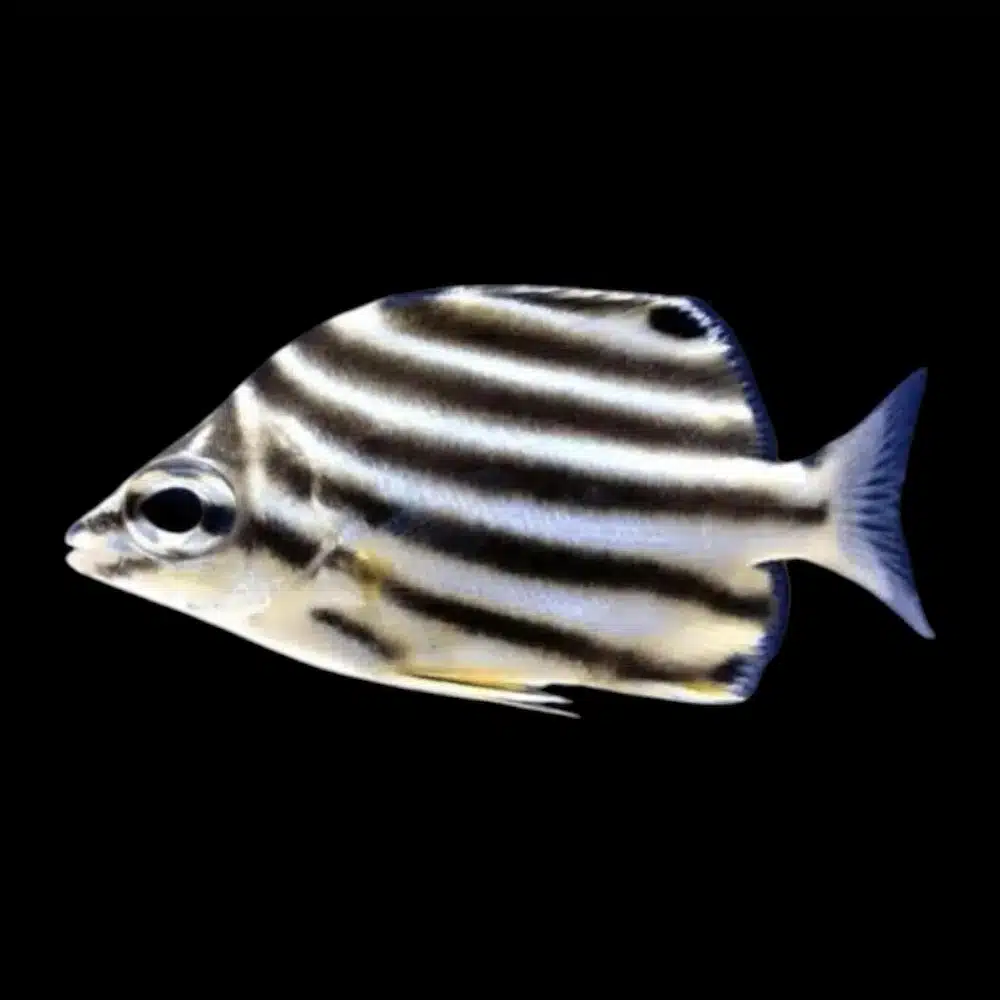
Australian Stripey
(Microcanthus strigatus)
- Bright yellow and black vertical stripes, found in Australian waters.
- Hardy and adaptable; sometimes seen in public aquariums.
- Can be found in estuarine as well as reef environments.
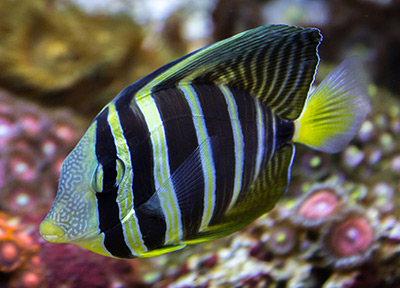
Sailfin Tang
(Zebrasoma veliferum)
- Large dorsal and anal fins give it a “sail-like” appearance.
- Bold stripes and striking presence in tanks.
- Needs lots of space; great algae eater.
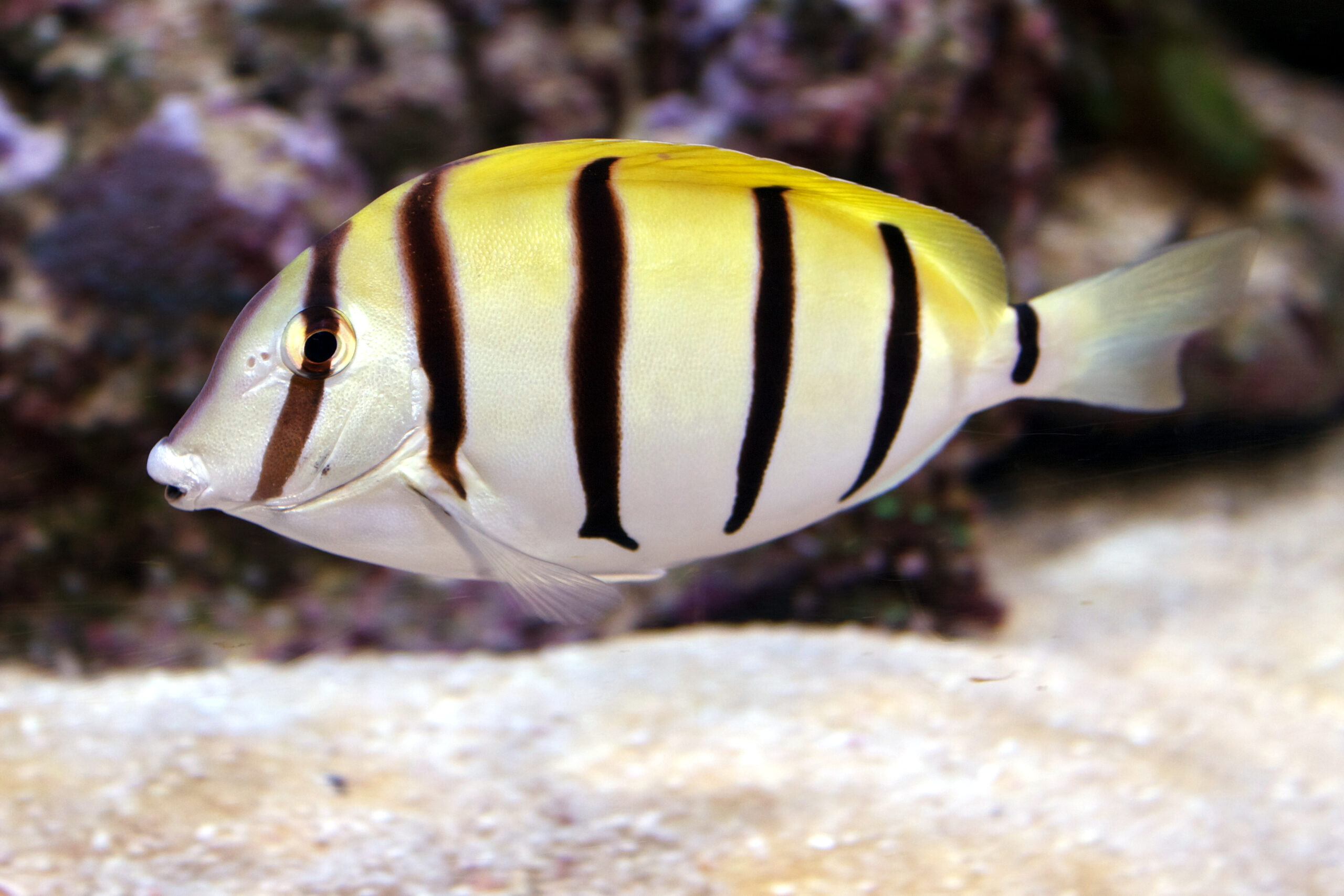
Convict Tang
(Acanthurus triostegus)
- Easily recognized by its black stripes on a white body.
- Schooling tang, often seen in large groups in the wild.
- Active and fast swimmer; peaceful with other species.
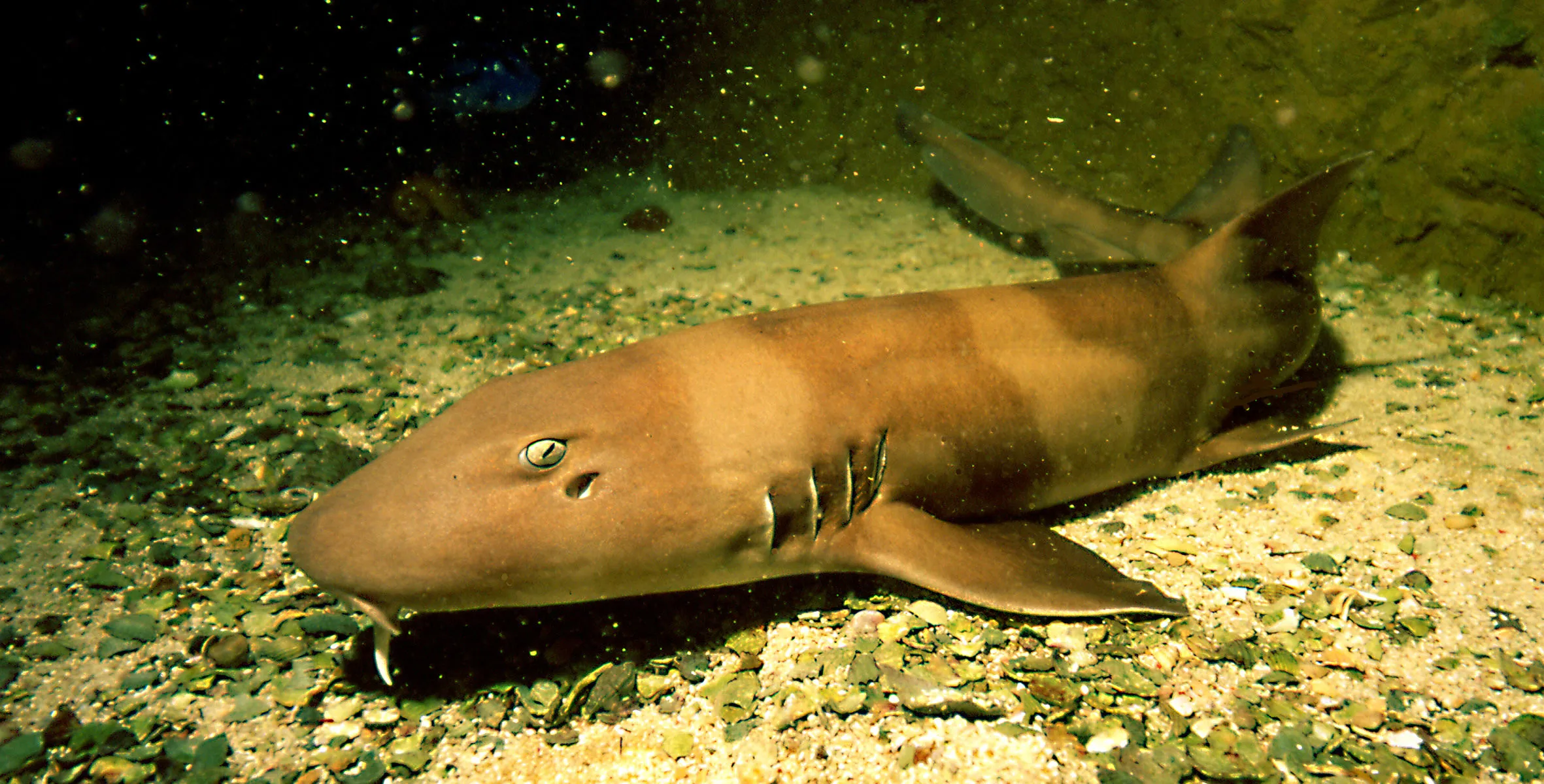
Bamboo Shark
(Chiloscyllium spp.)
- Bottom-dwelling, nocturnal shark; safe for large home aquariums.
- Eggs are called “mermaid’s purses.”
- Hardy and easy to hand-feed in captivity.
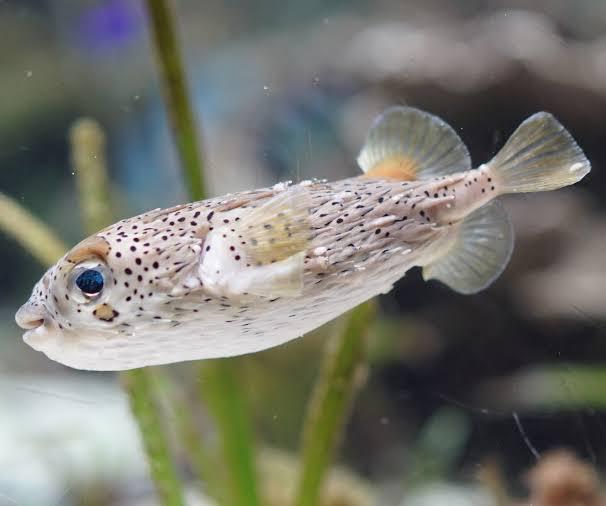
Long-Spine Porcupine Puffer Fish
(Diodon holocanthus)
- Also known as the Long-Spined Porcupinefish or Balloonfish, is a unique marine species recognized for its ability to inflate its body and erect sharp spines when threatened.
- It has large, expressive eyes, a beak-like mouth for crushing shells, and a spotted, balloon-shaped body that makes it a popular choice for larger marine aquariums.
- Interesting Fact: When the Long-Spine Porcupine Puffer inflates, not only does its body expand, but its long spines also stand up to deter predators—turning it into a floating, spiky ball!
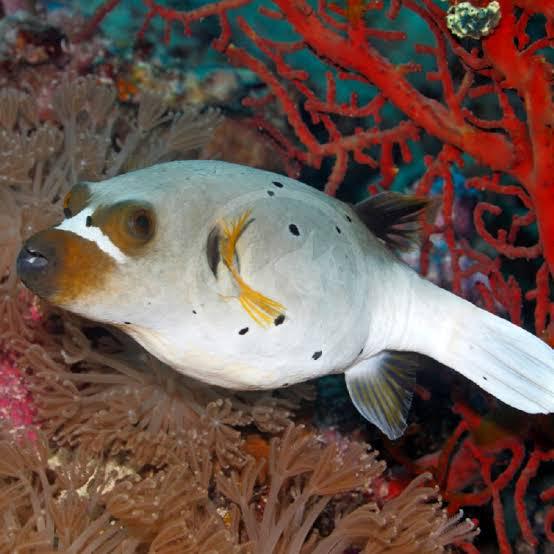
The Dog Face Puffer Fish
(Arothron nigropunctatus)
- The Dog Face Puffer Fish (Arothron nigropunctatus) is a charming and expressive marine species known for its rounded body and face that resembles a dog’s.
- It has smooth, rubbery skin and comes in a variety of colors. This puffer is peaceful, intelligent, and full of personality, making it a favorite in larger saltwater aquariums.
- Interesting Fact: The Dog Face Puffer Fish has the ability to recognize its owner and can even be trained to eat from their hand!
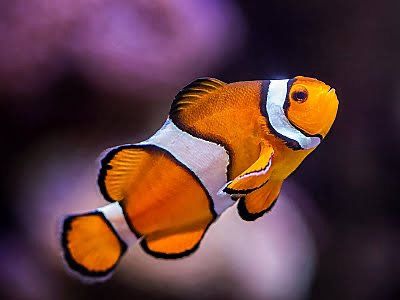
Clownfish (or Ocellaris Clownfish)
(Amphiprion ocellaris)
- Symbiotic relationship – Clownfish live among the stinging tentacles of sea anemones, gaining protection from predators while providing the anemone with food scraps and cleaning its tentacles.
- Sequential hermaphrodites – All clownfish are born male; the dominant one in a group becomes female, and if she dies, the next largest male changes sex to take her place.
- Special mucus coating – They have a unique mucus on their skin that prevents the anemone’s stings from harming them, something most fish lack.
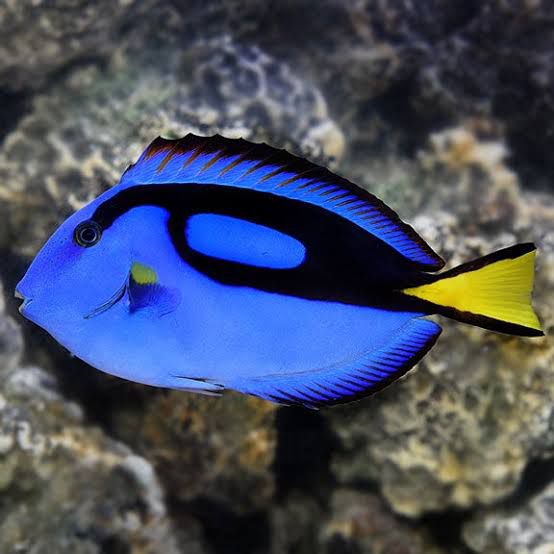
Blue Tang (also known as Regal Tang, Palette Surgeonfish, or Hippo Tang)
(Paracanthurus hepatus)
- Scalpel-like defense – Blue Tangs have sharp, retractable spines on each side of their tail that they use for defense against predators.
- Color change ability – Their bright blue and yellow colors can fade to a darker, duller shade when stressed or sleeping.
- Coral reef helpers – They play an important role in reef health by eating algae that can otherwise overgrow and harm corals.
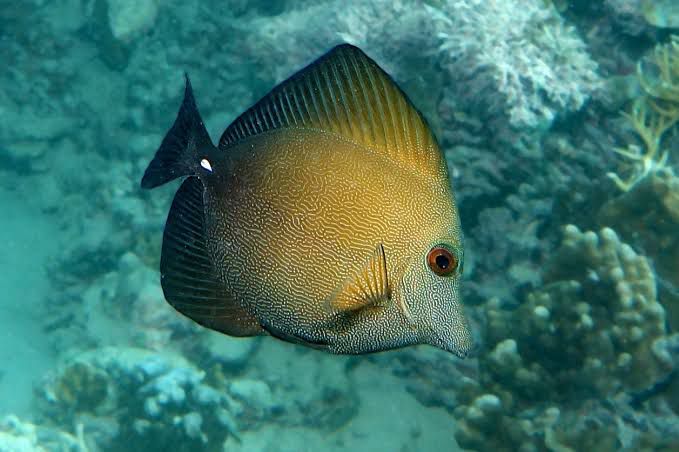
Scopas Tang (or Brown Scopas Tang)
(Zebrasoma scopas)
- Wide color variation – While generally brown with lighter speckles, Scopas Tangs can range from light tan to almost black, and some even show a yellow hue depending on their habitat.
- Algae controllers – They are herbivores that graze on algae all day, helping to keep coral reefs and aquariums clean and balanced.
- Territorial behavior – In the wild and in captivity, they can be aggressive toward other tangs, especially those with similar shapes or feeding habits.
Invertebrates
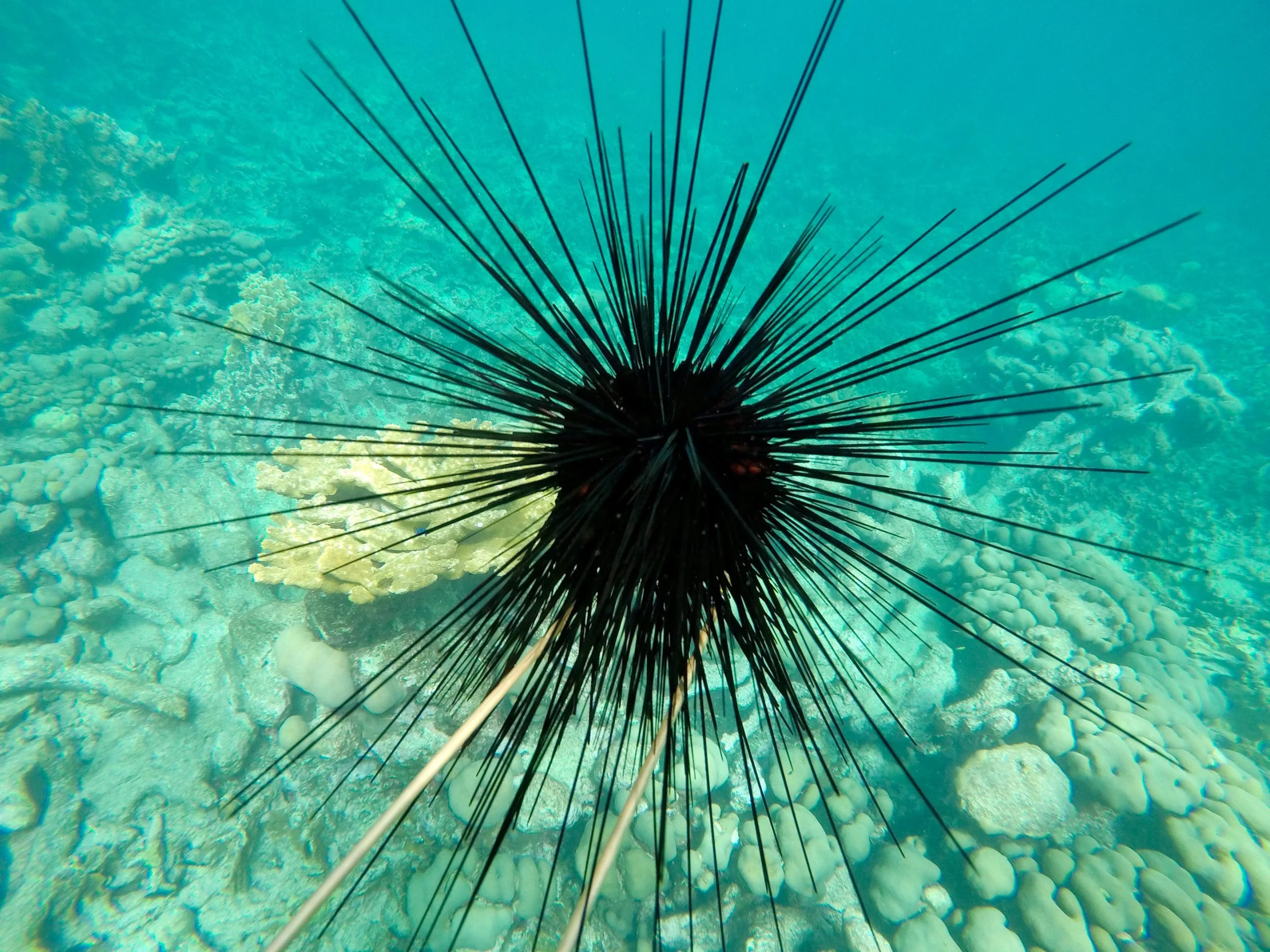
Sea Urchin
(Long Spine & Short Spine)
- Excellent algae grazers, especially on coralline algae.
- Long-spine varieties (e.g. Diadema) can be venomous.
- Important for reef health in the wild—control algae overgrowth.
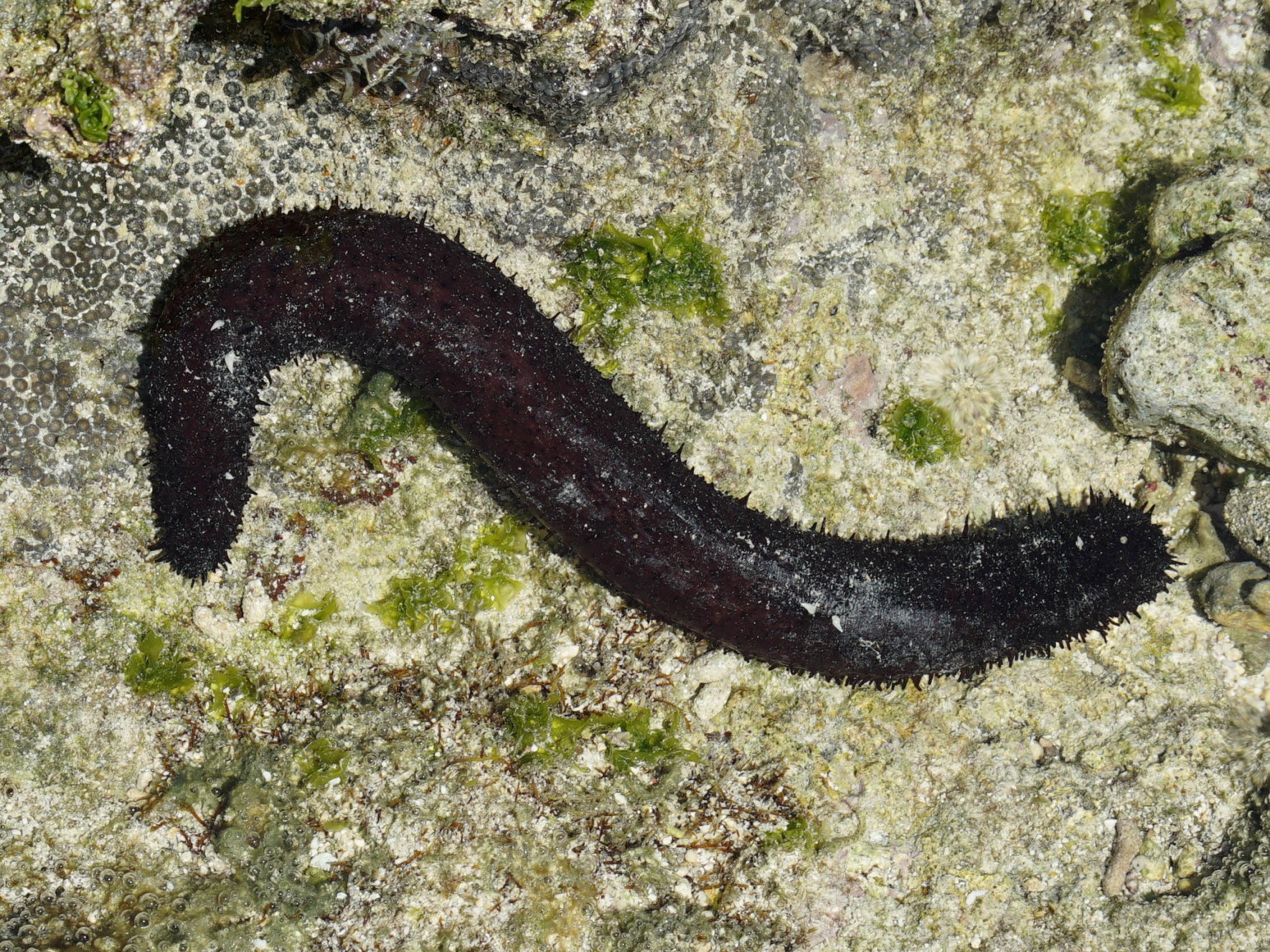
Sea Cucumber
(Class: Holothuroidea)
- Filter feeders and sand sifters—great tank cleaners.
- Can expel internal organs as a defense mechanism (evisceration).
- Some species release toxins when stressed, so choose wisely.
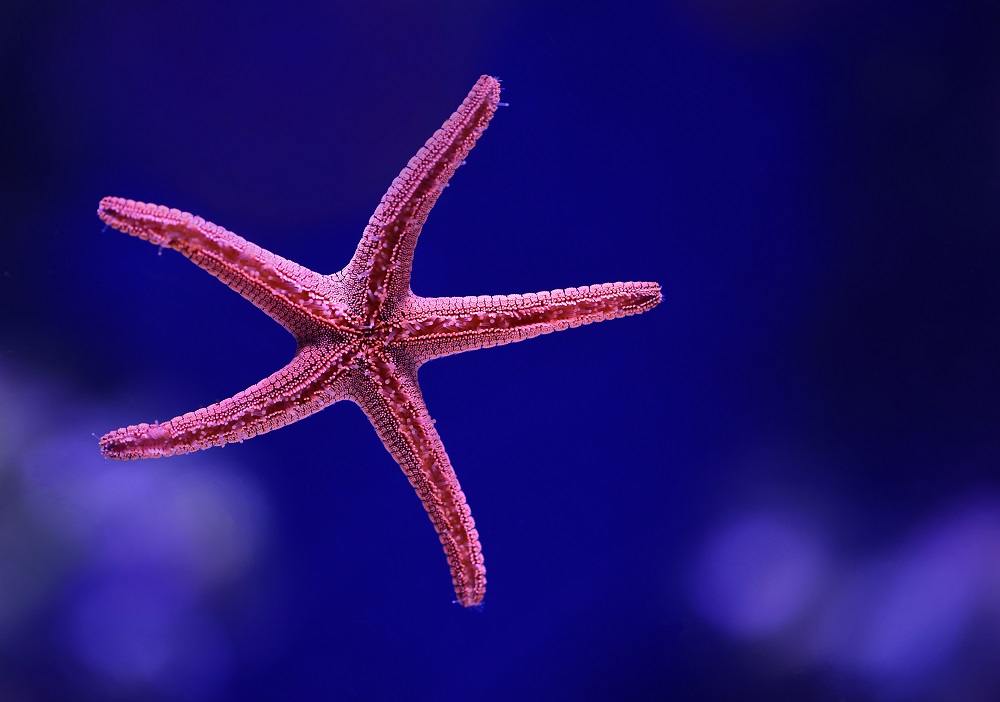
Starfish
(Class: Asteroidea)
- Regenerate lost limbs—some can regrow an entire body.
- Not all are reef-safe—some (e.g., Crown-of-Thorns) eat coral.
- Tube feet help them move and “smell” food.
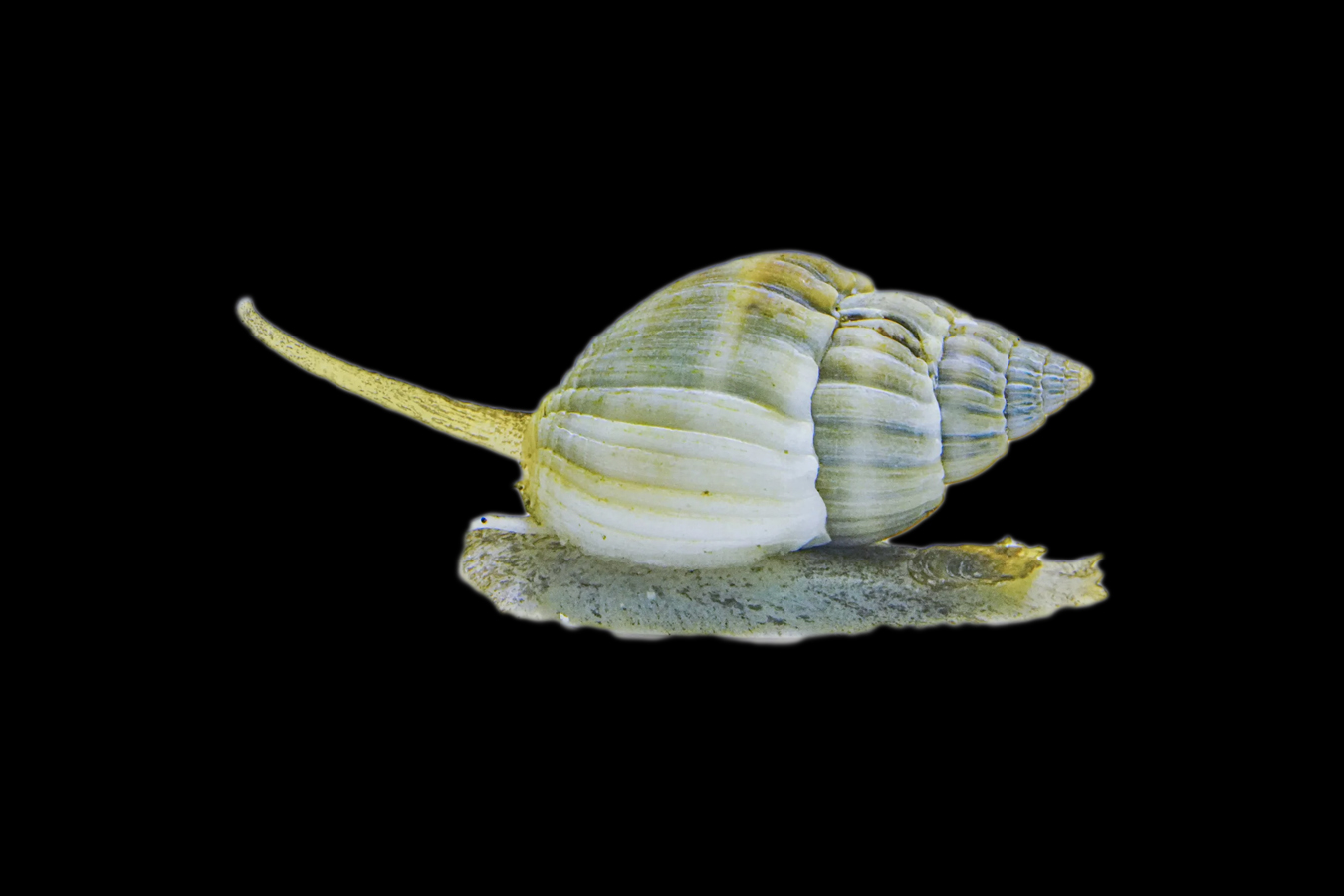
Nassarius Snails
(Long Spine & Short Spine)
- Carnivorous scavengers—great at cleaning up uneaten food.
- Hide in the sand and emerge quickly when food is detected.
- Rapid breeders in a well-fed aquarium.
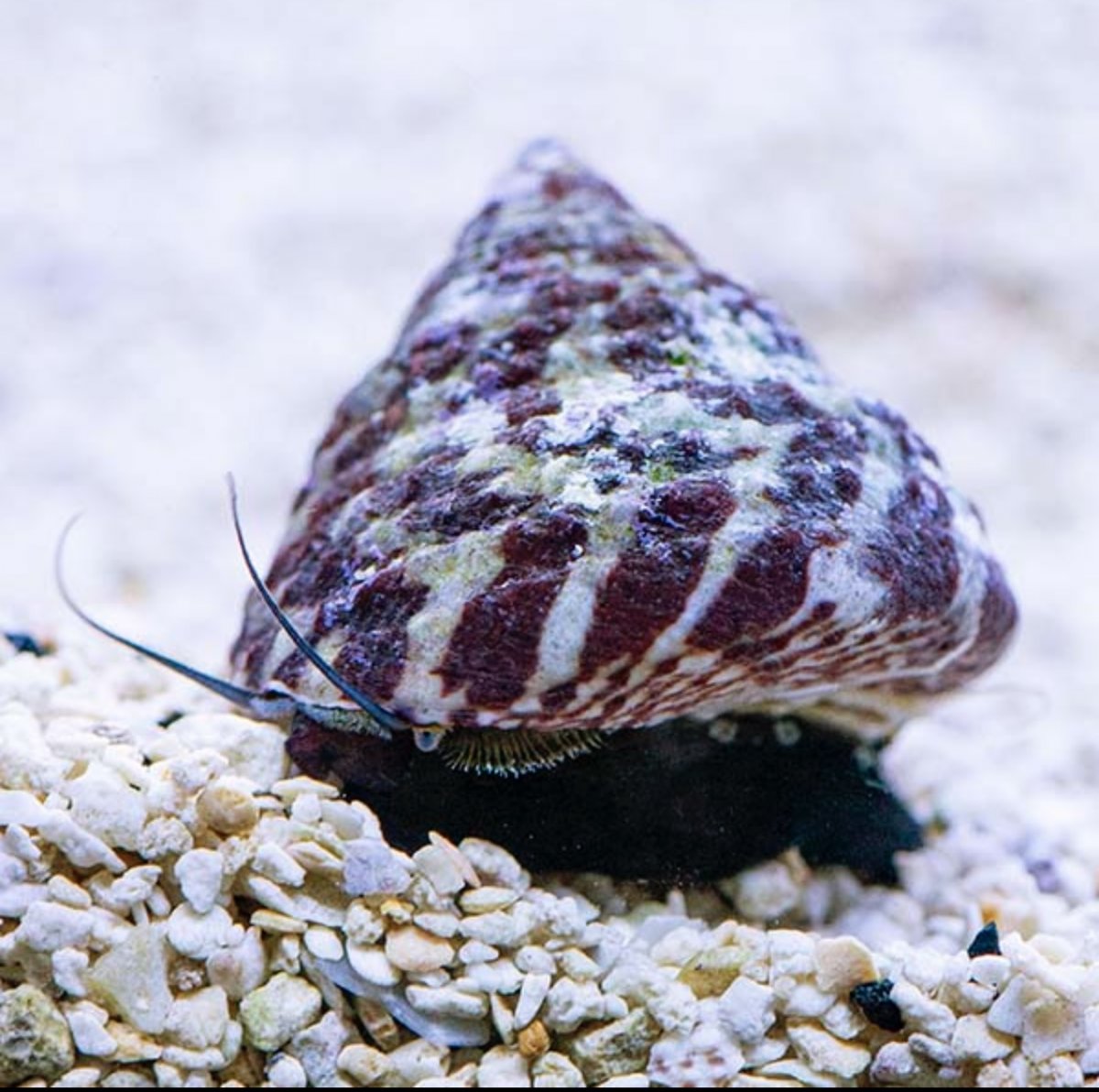
SeaTurbo Snails
(Turbo spp.) Snails
- Algae-eating powerhouses; keep rocks and glass clean.
- Strong enough to knock over loose corals.
- Hardy and reef-safe.
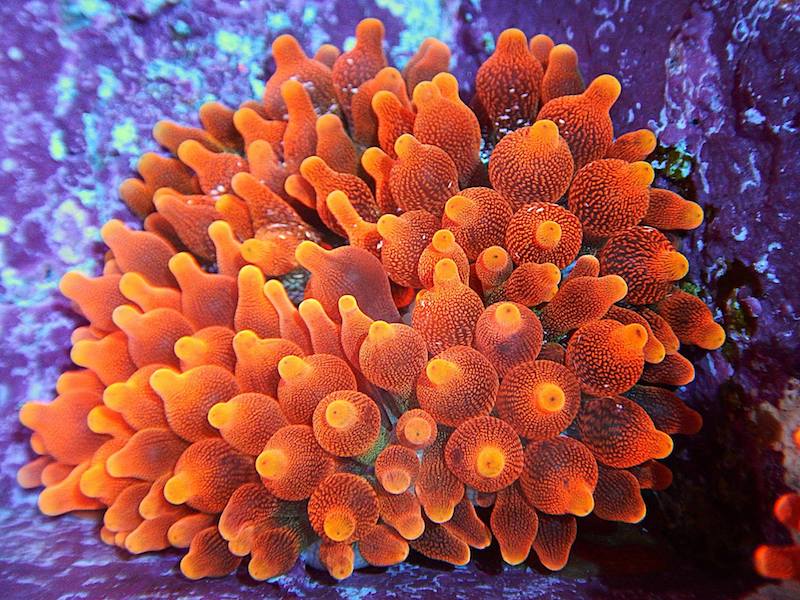
Red Bubble Tip Anemone
(Entacmaea quadricolor)
- Regenerate lost limbs—some can regrow an entire body.
- Not all are reef-safe—some (e.g., Crown-of-Thorns) eat coral.
- Tube feet help them move and “smell” food.
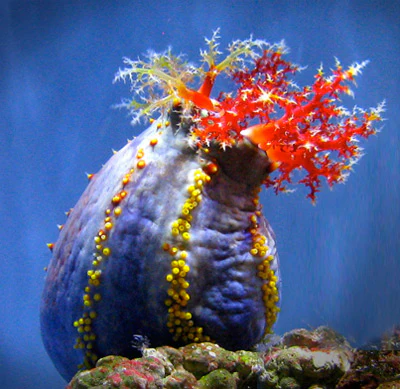
Sea Apple
(Pseudocolochirus spp.)
- Vibrant, colorful filter feeders.
- Can release toxic substances if stressed or injured—handle with caution.
- Fascinating to watch during feeding.