Category: Blog

  • A Guide to Choosing the Right Filter for Your Aquarium

    A Guide to Choosing the Right Filter for Your Aquarium

    You set up a beautiful tank, but within a few days you notice the water is cloudy and the fish look stressed. The secret to a thriving aquarium is not magic; it’s finding the perfect filter for your tank.

    Filtration is an integral part for the health and wellness of your tank’s aquatic life. It ensures water remains clean, well oxygenated and free of harmful chemicals.

    Understanding which filter is best for your tank depends on factors like water volume, required flow rate, and the level of filtration needed. Also, before picking a filter, you need to know how they work. Mostly, filters focus on the following methods:

    1. Mechanical Filtration: Mechanical filters are like trash cans; they collect waste like leftover food and aquatic animal excreta. Just as a trash can needs to be emptied before it overflows, mechanical filters should be cleaned regularly.
    2. Biological Filtration: Biological filter or biofilter in a fish tank is a filter containing porous media that allows water to pass through it. This filter media serves as a home for aerobic, nitrifying bacteria that break down fish waste to keep the environment safe and non-toxic.
    3. Chemical Filtration: Using materials like activated carbon, this method removes dissolved waste, impurities and odours from the water.

    In short – Mechanical filteration cleans the water, Biological makes it safe, and chemical filtration makes it crystal clear.

    Here are the most common types of filters to help you choose the best fit for your aquatic world.

    1. Sponge Filters

    Sponge filters are cost effective and a good choice for specialized tanks. They provide great mechanical and biological filtration by drawing water through a porous sponge.

    • Best for: Fry (baby fish) tanks, shrimp, hospital tanks and gentle flow lovers like Bettas.
    • Cons: They lack chemical filtration and are not aesthetically pleasing. Please make sure its placement is well-planned so it does not impact the beauty of your tank.

    2. Canister Filters (Best for Large Tanks)

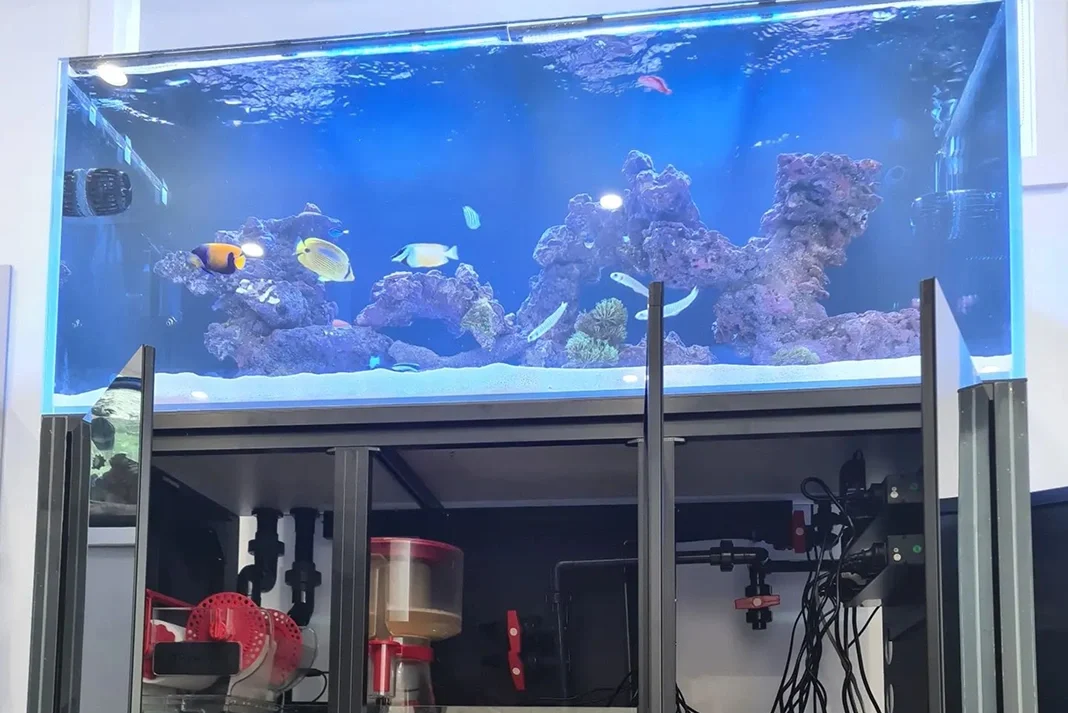
    Canister filters are external filters, usually placed inside cabinets so they don’t affect the look of the tank. They are ideal for large aquariums with big fish, high waste, heavily planted tanks and reef setups that need precise nutrient management. Due to their high efficiency, they effectively
    trap waste and reduce the need for frequent water changes.

    • Pros: Highly effective, quiet and reduces the need for frequent water changes.
    • Cons: More expensive and require diligent maintenance as they rely on tubing and seals; leaks can occur if the unit is not maintained correctly.

    3. Hang-on-Back (HOB) Filters

    HOB are beginner friendly popular filters, good for small to medium-sized tanks. They hang on the tank’s edge, pull up water from the tank, clean it and return like a waterfall. They have all three features of mechanical, biological and chemical filtration.

    HOB filters provide a balance between efficiency and affordability

    • Pros: They offer a great balance of mechanical, biological and chemical filtration.
    • Cons: They create some noise when water level drops. Also, they hang behind the tank, so if the tank is placed against the wall, it is difficult to install them.

    4. Internal Filters

    Internal filters as they sit inside the tank. They take up minimal space and are easy to install. These are ideal for small to medium-sized tanks.

    They are affordable than external filters, almost noise proof as they remain submerged in water, which makes them ideal choices for bedrooms and offices.

    • Pros: They are almost noise free, easy to install, no risk of external leaks, and are easy to maintain.
    • Cons: They take up valuable space inside the tank.

    There is no “one size fits all” filter. Consider your tank size, fish type, space and budget. Biggest piece of advice? When you’re serious about this hobby, avoid going to a generic chain pet store. Go to a specialty aquarium store instead. There are many top-end stores (especially here in Melbourne) that can give you expert advice – and we’ve also set up similar systems ourselves, so we understand what works and what doesn’t.

    Aquarium keeping can become very expensive if you make mistakes, so finding a store that won’t sell you more than you need is key. Get expert advice on your setup, and your tank will thank you for it!

    You can also explore our setup here: https://atlantisandco.com.au/

  • Setting Up an Aquarium in Melbourne: Essential Equipment Guide

    Setting Up an Aquarium in Melbourne: Essential Equipment Guide

    Thinking of setting up an aquarium? It’s not just about adding water and fish- it’s about creating a proper home for them.

    Just like we plan things before moving into a house, fish also need the right setup to live comfortably. And as a beginner, we often get confused about what’s actually necessary and what’s not.

    Some things are non-negotiable, while others you can add later. So, before bringing your fish home, it’s important to get the basics right.

    So here we are giving a list of essential basic equipment.

    Fish Tank

    First off, you need a tank with appropriate size. If you are thinking about getting a bowl or a glass jar, honestly, that isn’t a good idea. It’s unhealthy for the fish because you won’t be able to regulate the temperature properly, a filter system won’t fit, and the fish won’t have enough space to move.

    A bowl makes it impossible to:

    • Maintain basic water parameters like pH and hardness.
    • Keep the water oxygenated and clean.

    You should definitely prefer a proper tank instead. You can start with a small to medium-sized one for now and shift to a larger one later if you want.

    Filter

    Just as we require a clean home to stay healthy, an aquarium needs a filter to maintain a safe environment for aquatic life. So it is inhumane to keep fish in captivity without a good filter system.

    The Filter helps:

    • To remove dirt and waste so the water remains fresh and clear.
    • To keep fish stress free, leading to much better health.
    • To make an aquarium stable and truly liveable.
    • To create essential water circulation and house beneficial bacteria, preventing stagnant water.

    You can explore beginner friendly internal or sponge filters easily at the local Melbourne aquarium stores or online retailers.

    An aquarium filter is not just an accessory, it is a necessity for any tank. It ensures a clean, chemically balanced and oxygen-rich environment for the well-being of your pets.

    Lighting

    Lightning plays a crucial role in maintaining a healthy and vibrant ecosystem in your tank. It is more than just a decorative element.

    • Good lighting is necessary for plant growth
    • Natural cycles of light and darkness regulate the fish behaviour, such as feeding, reproduction and sleep patterns.
    • A good lighting enhances the aesthetic appeal of your aquarium

    For a thriving aquarium, select an LED with the correct PAR output (usable light) rather than just high wattage, ensuring it covers the full spectrum.

    Adjustable Heater

    Mostly the requirement of heater depends on the fish species, but in places like Melbourne, a A good heater is important due to temperature variations.

    • It helps in preventing winter temperature drops, ensuring water remains above 20°C, and keeping tropical fish safe.
    • It helps in stabilizing daily fluctuations. Melbourne weather often faces rapid temperature changes within a single day. So a heater prevents these fluctuations inside the tank.

    So in Melbourne you can use a heater even in summer, as the thermostat will simply prevent it from turning on, but it will be ready to act on a cold and rainy day. Usually, it is safe to use 1 watt of power per litre of water, but in case your tank is in a cold room or against an outside wall, you
    can consider a bit higher wattage.

    Temperature Controller

    Just relying on the aquarium heater and not investing in a good temperature controller is the major mistake that most aquarium owners make. They just check the heater with a thermostat and ignore the controller, thinking it’s an extra cost. But for the 24/7 safety of the tank, a temperature controller is a must.

    • It prevents fetal disasters. If a heater’s internal thermostat fails in the “on” position, it can quickly raise the water temperature, killing fish. A controller shuts off power to the heater when the target temperature is exceeded.
    • It ensures stable temperature, unlike standard heaters, which can have significant temperature swings.
    • Helps in protecting the delicate aquatic life
    • It reduces the load on the heater, stopping it from running constantly, thus preventing premature failure and extending its life.

    In short, it’s not an extra- it’s protection for your entire tank’s ecosystem.

    Thermometer

    An aquarium thermometer is an essential tool to help you in monitoring water temperature accurately and ensure a stable environment for fish, shrimp and aquatic plants. In an aquarium, the thermometer is-

    • Crucial for spotting faulty heaters before harming any of your fish.
    • Essential to keep a close eye on temperature to keep your plant life thriving.

    Whether you have a small aquarium or a large display tank, a reliable thermometer ensures the safety of your aquatic friends.

    An aquarium is not just a random decor item as it comes with the responsibility. You need to create a safe environment for your fish. So instead of getting confused, just start with the essentials and invest in quality equipment. If you are based in Melbourne, prefer to buy from trusted local aquarium stores or verified Australian retailers to ensure product quality and easier replacements.

    Once everything is in place, sit back with a coffee and enjoy the balance and calm you have created!

  • When to Call a Professional for Your Aquarium

    When to Call a Professional for Your Aquarium

    Looking after your aquarium at home can be a pleasing and calming experience. Regular feeding, basic cleaning, and the occasional water change are things most aquarium owners can handle on their own.

    But there is a fine line between routine care and when your tank actually needs professional attention. And often, by the time it becomes obvious, it’s already a bit too late.

    So how do you know when to step in and when to call in the experts?

    Here are some clear signs you need to watch out for 👇

    When Your Water Quality Starts Changing

    Crystal clear water is always a good sign. But if you start noticing your tank looking cloudy, milky, or developing a yellow or brown tint, and it doesn’t improve after a regular water change – that’s a red flag.

    This could be due to:

    • Waste buildup
    • Excessive algae
    • Bacterial bloom
    • Or even a foul smell developing

    At this point, a simple DIY fix usually is not enough. A professional can assess the condition of your tank and carry out a deep clean, including substrate vacuuming and filter maintenance, to restore balance and clarity.

    When Algae Gets Out of Control

    A little algae? Totally normal.

    But if you feel like you are constantly battling it and especially if it starts turning brown, red, or slimy – it’s time to take it seriously.

    Persistent algae growth is often caused by:

    • Nutrient imbalance
    • Incorrect lighting
    • Poor water circulation
    • Declining water quality

    Instead of just cleaning it again and again, an expert can actually identify the root cause and fix it properly, so it doesn’t keep coming back.

    When Your Fish Start Acting Strange

    Your fish are the best indicators of your tank’s health.

    If you notice unusual behaviour like:

    • Lethargy or lack of movement
    • Hiding more than usual
    • Ignoring food
    • Gasping at the surface
    • Erratic or unsteady swimming

    it’s your tank telling you something is off.

    This could be linked to:

    • Low oxygen levels
    • Sudden temperature changes
    • High ammonia or nitrate levels

    A professional will test the water, check the environment, and identify the exact issue before it escalates further.

    When Equipment Isn’t Performing Like It Should

    Your aquarium equipment – filters, heaters, air pumps, lighting – keeps everything running smoothly.

    But unlike obvious breakdowns, most equipment issues happen gradually.

    You might notice:

    • Heater not maintaining accurate temperature
    • Filter flow slowing down
    • Frequent minor malfunctions
    • Unpleasant odours from the tank

    Even a small issue in one component can create a ripple effect across the entire system, leading to algae blooms or poor water conditions.

    Regular servicing and inspection by a professional ensures everything is working efficiently before it becomes a bigger problem.

    When Cleaning Has Been Skipped for Too Long

    Life gets busy, we get it.

    But if your tank hasn’t had proper cleaning in over 5 – 6 weeks, it’s likely more is happening beneath the surface than you can see.

    Even if the water looks clean:

    • Ammonia and nitrate levels may be rising
    • PH balance could be off
    • Waste may be accumulating in the substrate
    • Algae could be starting to build up

    In these cases, a deep professional clean can help reset your tank and bring everything back to a healthy state.

    Don’t Wait Until It’s Too Late

    A lot of aquarium issues build up slowly and by the time they are visible, your fish may already be under stress.

    Regular attention and timely intervention are what keep your tank thriving, not just surviving.

    At Atantis & Co, we provide professional aquarium care and maintenance services across Melbourne – whether it’s for your home, office, or commercial space.

    From one – time deep cleans to ongoing maintenance plans, everything is tailored to what your tank actually needs. We also offer same-day service for nearby locations, so you’re never left dealing with a problem for too long.

    If something doesn’t feel right with your aquarium, it’s always better to get it checked sooner rather than later – and that’s exactly what we are here for.

  • Beginner Friendly and Easy to Care Fish for Your First Aquarium

    Beginner Friendly and Easy to Care Fish for Your First Aquarium

    Starting your first aquarium is super exciting, but it’s normal to feel a bit overwhelmed by all the colourful choices! If you’re setting up a tank in Melbourne, you need to keep our chilly winters in mind to keep your fish happy and healthy.

    While many tropical fish love warmer water, you’ll want to ensure your tank stays between 22°C and 24°C to keep them comfortable during Melbourne’s colder months.

    Here we have summed up a few key factors which we need to consider while choosing the fish:

    • Size of the tank: How big is your aquarium? Some fish need more space to thrive.
    • How big will the fish grow?
    • Compatibility of different species.
    • Temperature needs of species you are choosing as some fish prefer warmer or cooler water.
    • Food habits: What type of food your selected species require?
    • Lighting and plants: Different species have different needs for plants and light. So choose those which has similar requirements.

    Small Tanks (5–10 Gallons)

    If you’re starting with a desktop size tank, you need to pick the small fish, that don’t grow larger than 1.5- 2 inches. For small tanks, you need to avoid large schooling fish, they will feel packed up and stressed.

    Best fish for small tanks:

    • Betta Fish: Known for their beauty, Betta fish are found in a variety of colours. These are low-maintenance pets, hardy, easy to settle down in small size tanks. In short- most suitable for beginners. Betts are curious creatures and can recognize their owners as well! A heater and gentle water filter is essential to make them thrive.
    • Guppies: These are budget friendly, low maintenance and peaceful pets. Like Betts, these also come in a variety of colours. The best part is that they easily cohabit with other calm fish species. You can keep a school of 5-6, preferably 1 male and 2–3 females in small tanks. They grow upto 1.5- 3 inches.
    • Platies & Common Mollies: Both of these are easy to care for and super chill fish species. They nibble on algae and help keep the tank clean. Platies are the colourful, low-maintenance choice for smaller tanks, while mollies are a little bigger, more active, and can uniquely live in anything from fresh to saltwater.

    Other additions:

    • Cherry Shrimp: These bright red color animals are hardy and tolerant to little variable water pH and temperatures. These are peaceful algae eaters and produce minimal waste due to their small size.

    Recommended plants:

    • Ambulia Plant: Looking for an easy, beautiful plant to level up your tank? Ambulia is just what you need! It is fast growing – Great for soaking up excess nutrients and preventing algae Perfect for shrimp and fry – Its soft, feathery leaves make the perfect hiding spots Easy to care for – No CO2 required, just moderate lighting Adds a soft, natural look – The bright green tones bring life to any aquascape!
    • Java Moss: It is one of the easiest plant for your aquarium. Pretend you don’t care about it and it grows a lot faster. Apart from being hardy, versatile and beautiful, it provides a soft nesting place for your shrimps also.

    Medium Tanks (10–20 Gallons)

    With slightly larger tanks, you can introduce more active or slightly bigger species.

    Recommended fish:

    • Tetras: Tetras are Jewels of the Aquarium! They are small, vibrant fish that love to swim in groups and thrive in well-planted tanks with clean, stable water. Tetras also thrive with other friendly fish.
    • White Cloud Mountain Minnows: They are extremely forgiving with regard to aquarium temperature and water quality. They love to be in a school of 5-6 in a medium-sized aquarium and usually swim near the top or middle of the tank.
    • Mollies & Platies: They are live bearers. So for these you need to have a good female-to-male ratio to lessen aggression and to prevent inbreeding. 1-3, if not more, is a safe bet usually. Mollies reproduce fast. If you plan on trying to keep the babies, have enough hiding spots. This way, they don’t get eaten up by the adults.

    They prefer slightly warmer temperatures (24- 28°C) during Melbourne’s winter.

    Additional community fish for medium tanks:

    • Corydoras Catfish: Cories are great tankmates- they clean up all the food that settles to the tank bottom, are moderately active, quite cute and fun to watch.
    • Cherry Barbs: They’re peaceful creatures, suitable for smaller tanks, very pretty, compatible with plants, and generally a very rewarding fish to keep!

    Essential Tips

    1. Start slowly and observe: Instead of overcrowding the tank at once, you need to introduce the fish gradually.
    2. Check compatibility: Some species can be aggressive or require specific water conditions. So we need to find out our swimming pets with similar needs or those who complement.
    3. Maintain temperature: Melbourne winters can be cold, so a reliable heater is essential.
    4. Feed properly: Different species have different diets—some are omnivores, some herbivores.
    5. Plants help: Live plants like Ambulia and Java Moss provide hiding spots and help maintain water quality.

    Starting your aquarium journey with the right fish and plants makes the experience enjoyable and rewarding. With a little planning and care, your tank will become a beautiful, thriving underwater world in your Melbourne home!

  • The Secret to a Crystal Clear Tank: It’s Not About “Scrubbing”

    The Secret to a Crystal Clear Tank: It’s Not About “Scrubbing”

    As an aquarium professional, if I had to give one piece of advice to every aquarium hobbyist who walks into my shop, it’s this: Don’t try to make your aquarium “Perfectly Clean”.

    An aquarium is a living ecosystem. If you over clean it, you kill the beneficial bacteria that keep your fish alive. If you under-clean it, waste accumulates. So you need to stay in between, neither overclean, nor let the tank become too dirty.

    Here I am sharing a simple routine that helps you maintain a healthy and happy fish tank.

    1. The Daily “Coffee Break” Check

    You don’t need to spend hours on your tank every day. Just spend two minutes observing while you feed them.

    • Does everyone look active? Is anyone hiding or feeling stressed?
    • Have a look at your heater and filter, which is like the “pulse” of the tank, to make sure everything is running smoothly.
    • If you notice a leaf starting to rot or a clump of food sitting at the bottom, just scoop it out.

    2. The Weekly Refresh (15- 20 Minutes task)

    Maintain a weekly cleaning schedule, instead of an aggressive monthly scrub.

    • The 25% Rule: Only change about 15–25% of the water. This keeps the chemistry stable so your fish don’t get “shocks.”
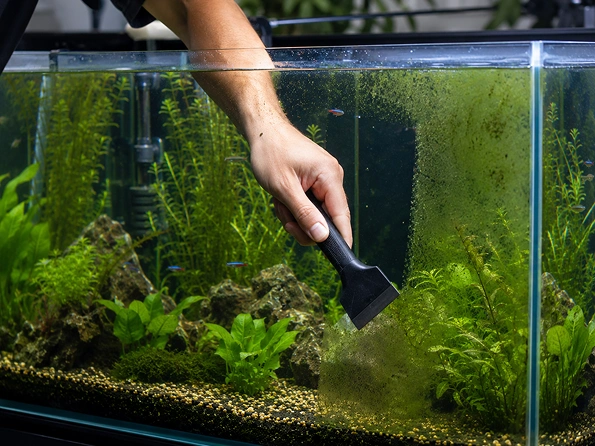
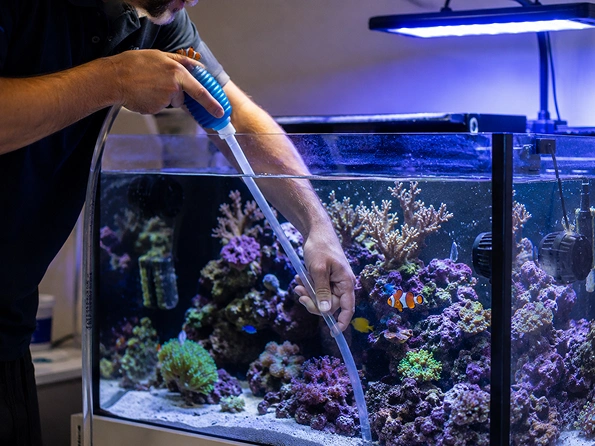
    • Gravel Vacuuming: This is the best investment you can make. Use a siphon vacuum to suck the waste out of the rocks. If you’re unsure which tools are right for your setup, or prefer professional servicing, our Melbourne-based maintenance plans ensure your system stays balanced.
    • Prepare the Water: Before pouring new water, make sure it is safe. Normal tap water is harsh so use a conditioner. Also, try to get the temperature of fresh water, as close to the existing tank water as possible.

    3. Monthly Deep-Dive

    Once a month, you need to look ‘under the hood.’ Don’t just glance at the fish, examine the parts of the tank that are usually out of sight.

    • The Filter Golden Rule: When your filter media gets gunky, never wash it under running tap water. Tap water contains chlorine that kills the “good” bacteria living in your filter. Always rinse your sponges in a bucket of old tank water.
    • Trim the plants: If live plants are starting to take over, give them a little trim.
    • Water Testing: Crystal clear water could also be unhealthy for your living creatures. So once a month, use a reliable testing kit to check your Ammonia and Nitrate levels. It’s the only way to know for sure if your water is actually safe for your “loving friends” inside.

    The “Big No-No” List

    To save your tank from crashing, avoid these silly mistakes:

    • Soap and detergents: Even a little trace of detergent could be hazardous for your loving friends inside the tank.
    • Don’t change and clean everything at once: If you swap the filter pads and vacuum all the gravel on the same day, you’re basically flushing the “good” bacteria down the drain. Space those chores out so your tank stays balanced.
    • Don’t do complete water change: Unless there is a literal poison in the water, a total change usually causes more harm than good.

    Your aquarium should be fun to take care of — not feel like a daily chore. For a quick daily check, just grab a coffee, pull up a chair, and simply watch your fish. Listen to the hum of your filter and heater — and that’s it for the day. Then just sit back and enjoy the live view.

  • Creating a Healthy Aquarium: Common Mistakes to Avoid

    Creating a Healthy Aquarium: Common Mistakes to Avoid

    There is something peaceful about watching fish swim quietly in a tank. An aquarium can completely change the feel of a room. It brings calmness, movement and life into a space.

    But behind that calm view, there is a living system that needs regular care.

    If you’re just getting started, you might find our Beginner Aquarium Guide: What to Know Before You Buy helpful.

    Let’s look at some of the most common aquarium care mistakes — and how to avoid them.

    Choosing a Tank That’s Too Small

    A lot of people assume a small tank will be easier to manage.

    In reality, smaller tanks are often less stable. Water conditions change faster, and even minor overfeeding or missed maintenance can quickly create an imbalance.

    A slightly larger tank provides more stability and gives your fish a healthier environment to grow. In many Melbourne homes where indoor temperatures fluctuate between seasons, a stable Water volume makes an even bigger difference.

    Fish care Mistakes

    • Adding Too Many Fish at Once

    Beautiful colours, different shapes — it’s tempting to bring several home at once.

    But adding too many fish at one increases waste levels quickly. Your filtration system may not be ready to handle the sudden load.

    So it is better to introduce fish slowly. And always consider how large each species will grow — that small fish today may need far more space later.

    • Not Checking Compatibility

    Not all fish species get along. Some are peaceful, while others are aggressive.

    Mixing incompatible fish can cause stress and injury. Before adding new fish, research whether they are suitable for your existing setup.

    • Overfeeding

    Overfeeding is one of the most common aquarium care mistakes.

    Excess food settles at the bottom, breaks down and pollutes the water. So, usually feeding once or twice a day in small amounts is enough. Remove uneaten food immediately and make sure you are using the correct type of food for your fish.

    Water Related Mistakes

    Water quality is the foundation of a healthy aquarium.

    • Not Cycling the Tank

    Before adding fish, a tank needs time to build beneficial bacteria. These bacteria break down waste and keep the water safe.

    Adding fish too early can lead to stress and serious health issues.

    • Incorrect Water Changes

    Some owners change water too often or wait too long. Another common mistake is replacing all the water at once.

    Instead, change around 20 – 25% of the water weekly. This keeps conditions stable without shocking your fish.

    In areas like Melbourne, where tap water contains chlorine and mineral variations, consistent partial changes combined with proper water conditioning are especially important.

    • Using Untreated Tap Water

    Tap water usually contains chlorine, which is harmful to fish.

    Always use a water conditioner before adding fresh water to your tank. This simple step protects both fish and beneficial bacteria.

    Temperature Shock

    Sudden temperature changes can stress fish.

    When adding fresh water, ensure it is close to the existing tank temperature. Seasonal shifts in Melbourne can make this even more important during winter and summer months.

    Cleaning and Maintenance Errors

    Over cleaning and not cleaning on time both are risky for your tank.

    Cleaning too aggressively can disturb the natural balance of the aquarium. On the other hand, neglecting cleaning for too long also causes problems.

    Avoid deep cleaning everything at once. Gentle, regular maintenance works far better than occasional heavy scrubbing.

    Filter Mistakes

    A filter does more than just circulating the water, it holds beneficial bacteria that keep the aquarium stable.

    Never wash filters under tap water. Tap water kills the beneficial bacteria. Instead, rinse filter media gently in old tank water during a water change.

    Also ensure your filter is suitable for your tank size. An undersized filter may quietly struggle before visible problems appear.

    Lighting Mistakes

    Leaving aquarium lights on all day may seem harmless, but fish also need a consistent day-night cycle.

    Maintain balanced lighting hours each day and ensure your lighting setup suits your tank’s depth and plant requirements.

    Poor Tank Placement

    Where you place your aquarium matters more than you realise.

    Avoid:

    • Direct sunlight, it can lead to algae growth
    • Placement near heaters or air conditioners
    • High traffic areas where the people can frequently touch and tap the glass

    So choose a stable location with moderate temperature and minimal disturbance.

    Apart from being a beautiful focal point in your decor, an aquarium creates a calm and soothing environment. But, behind that peaceful view is a living ecosystem that depends on your care and attention. With some basic knowledge, you can easily avoid small mistakes that may gradually affect your tank’s balance.

    With thoughtful planning, regular maintenance and a little awareness, you can maintain a healthy, stress-free environment for your fish — and enjoy your aquarium for many years to come.

  • Beginner Aquarium Guide: What to Know Before You Buy

    Beginner Aquarium Guide: What to Know Before You Buy

    Getting an aquarium is exciting. It looks beautiful, feels calming and can completely change a space. But before buying a tank and fish, it is important to understand a few basic things.

    As aquarium specialists, we often see beginners make some initial decisions that later cause water issues or fish stress.

    So here are a few important things to know before setting up your first aquarium.

    Choose the Right Tank Size

    Many people think smaller tanks are easier to manage. But in reality, very small tanks are harder to keep stable.

    A slightly larger tank holds more water, which means temperature and water conditions don’t change quickly. This makes it more forgiving for beginners and safer for your fish.

    Start With Freshwater

    If this is your first aquarium, freshwater is the better choice, instead of saltwater.

    Saltwater tanks look amazing, but they require more monitoring and experience. Freshwatersystems are easy to maintain and ideal for learning the basics.

    Avoid Overcrowding

    Adding too many fish in the initial phase is the most common beginner mistake.

    Too many fish create more waste, which quickly affects water quality. Starting with fewer fish and increasing gradually allows the tank to adjust properly.

    Let the Tank Settle

    An aquarium needs time to establish a natural balance before fish are added.

    This process allows beneficial bacteria to grow. These bacteria help break down waste and keep the water safe. Skipping this step often leads to cloudy water and stressed fish.

    Water Quality and Filtration

    Good water quality is everything in an aquarium.

    A reliable filter removes waste and keeps the water circulating. Regular partial water changes are also important to maintain a healthy environment. Clear water does not always mean healthy water, here balance is the key.

    Feed Carefully

    Overfeeding causes more problems than underfeeding.

    Fish only need small portions once or twice a day. The extra food left in the tank decomposes and affects the water quality.

    Keep the Temperature Stable

    Fish are sensitive to sudden temperature changes.

    Don’t place the tank in direct sunlight or near air conditioning vents. Using a quality heater (when needed) helps maintain consistent conditions.

    Don’t Overdo the Cleaning

    Aquariums do need maintenance, but deep cleaning too often can disturb the natural balance.

    Gentle, consistent cleaning works much better than aggressively scrubbing everything at once.

    Fish Compatibility is Necessary

    Not all fish get along.

    Before selecting species, check that they are compatible in terms of size, temperament and water requirements. Peaceful combinations lead to a healthier, stress-free tank.

    Be Patient

    One of the best habits you can develop is simply observing your fish.

    Healthy fish are active and alert. Sudden behavioural changes can be an early sign that something is not right. Especially in the early weeks, patience is important, aquariums take time to fully stabilise.

    Starting an aquarium doesn’t have to be complicated. With the right planning and a basic Understanding how tanks work, you can maintain a healthy, balanced environment from the beginning.

    If you are unsure at any stage, speaking to an experienced aquarium professional can help you avoid common mistakes and set things up correctly from day one.

  • WHAT SAND AND HOW MUCH TO USE IN A SALTWATER AQUARIUM?

    WHAT SAND AND HOW MUCH TO USE IN A SALTWATER AQUARIUM?

    Over the years, I’ve experimented with various types of substrates and different quantities for saltwater aquariums. In this article, I aim to share what I’ve found to be the most practical and visually appealing.

  • HOW TO MAINTAIN A SALTWATER AQUARIUM

    HOW TO MAINTAIN A SALTWATER AQUARIUM

    I still vividly remember my early days as a saltwater aquarium hobbyist. When I set up my first tank, I was overwhelmed by the countless opinions on maintenance and every aspect of the hobby.